Dating and Domestic Violence Prevention Month (DVPM), known nationally as Domestic Violence Awareness Month (DVAM), is held each October as a way to educate communities about the signs of relationship abuse, spread awareness of resources, uplift survivors, and unite to prevent violence.
Everyone is deserving of healthy, respectful relationships, including friendships and intimate relationships. Dating and domestic violence involves a pattern of abusive behaviors that can include physical, sexual, emotional, financial and other methods of coercion and control. Affirmative consent for sexual activity is always necessary, including in ongoing relationships. To practice consent in relationships, practice open communication, ask and listen to your partner(s), pay attention to non-verbal cues, and educate yourself with the resources below.
UC Berkeley is dedicated to preventing and addressing relationship violence (also referred to as intimate partner, dating, and domestic violence), sexual harassment, and sexual violence on campus. We believe in fostering a culture that prioritizes respect, healthy relationships, and consent, and promoting a community that responds to and supports survivors and their allies. As part of these efforts, we are working to engage all members of the university community to create a healthy and inspiring environment where violence in any form is not tolerated.
Dating & Domestic Violence Prevention Month Events Calendar
Events happening during Dating/Domestic Violence Prevention Month 2024 will be posted here.
Submit your event to this calendar!
|
Resources
Please call 911 in an emergency.
Campus resources
- The PATH to Care Center provides confidential support for those who have experienced sexual harassment, relationship violence, sexual assault, stalking, and sexual exploitation. Need urgent support? Call our 24/7 Care Line at 510-643-2005.
- The Office for the Prevention of Harassment and Discrimination oversees campus compliance with University policies prohibiting protected category discrimination and harassment, including sexual harassment and violence.
Bay Area resources
- Family Violence Law Center: 24/7 Line: (800) 947-8301
- A Safe Place: 24/7 Crisis Line: (510) 536-7233
National resources
- National Domestic Violence Hotline: You can contact the hotline via phone (1.800.799.SAFE (7233)), chat, or text (Text "START" to 88788).
For more resource information, please visit:
- SVSH Hub website Survivor Support page
- SVSH Hub website Resource Guides page
Recognizing abusive behavior in intimate relationships
University of California Policy prohibits relationships violence.
According to the UC Policy on Sexual Violence and Sexual Harassment (SVSH),
"Relationship Violence is:
- Physical violence toward the Complainant or a person who has a close relationship with the Complainant (such as a current or former spouse or intimate partner, a child or other relative), or
- "Intentional or reckless physical or non-physical conduct toward the Complainant or someone who has a close relationship with the Complainant (such as a current or former spouse or intimate partner, a child or other relative) that would make a reasonable person in the Complainant’s position fear physical violence toward themselves or toward the person with whom they have the close relationship
that is by a person who is or has been in a spousal, romantic, or intimate relationship with the Complainant, or who shares a child with the Complainant, and that is part of a pattern of abusive behavior by the person toward the Complainant."
"Patterns of abusive behavior may consist of or include non-physical tactics (such as threats, isolation, property destruction, abuse of pets, economic control, displaying weapons, degradation, or exploitation of a power imbalance)."
Domestic violence is a crime.
California Penal Code 263.5 states domestic violence is willfully inflicting corporal injury resulting in a traumatic condition upon:
- The offender’s spouse or former spouse
- The offender’s cohabitant or former cohabitant
- The offender’s fiancé or fiancée, or someone with whom the offender has, or previously had, an engagement or dating relationship
- The mother or father of the offender’s child
Domestic violence can be reported to law enforcement, such as UCPD.
Additional resources to help you identify abuse in relationships.
Love is Respect is a national dating violence prevention organization and offers several helpful resources, including:
The National Domestic Violence Hotline website also provides resources on identifying abuse.
The Power and Control Wheel, developed by the Domestic Abuse Intervention Project, is a tool to help you understand some of the common abusive tactics used in intimate relationships to gain or maintain power or control over a partner.

A number of adaptions and translations of the Power and Control Wheel are available online.
Be part of preventing violence
Together, we're working towards a culture of consent, respect, and support for one another. Get involved!
- Workshops and consultations are available to departments, groups, and individuals on a range of topics, from healthy workplace climate to preventing and responding to sexual violence and sexual harassment.
- There are many ways for community members to help someone affected by violence and be an active bystander.
- There are also many ways for community members to get involved proactively in education and prevention efforts.
Everybody deserves to be safe
Promoting a safe and respectful environment for all is our utmost priority at Berkeley and we're proud of our community's commitment to helping prevent sexual violence and harassment. As part of DVPM, the PATH to Care Center has crafted the following “Everybody Deserves to be Safe” messages, reflecting views held by the majority of our community.
Please download and share these graphics with your community!


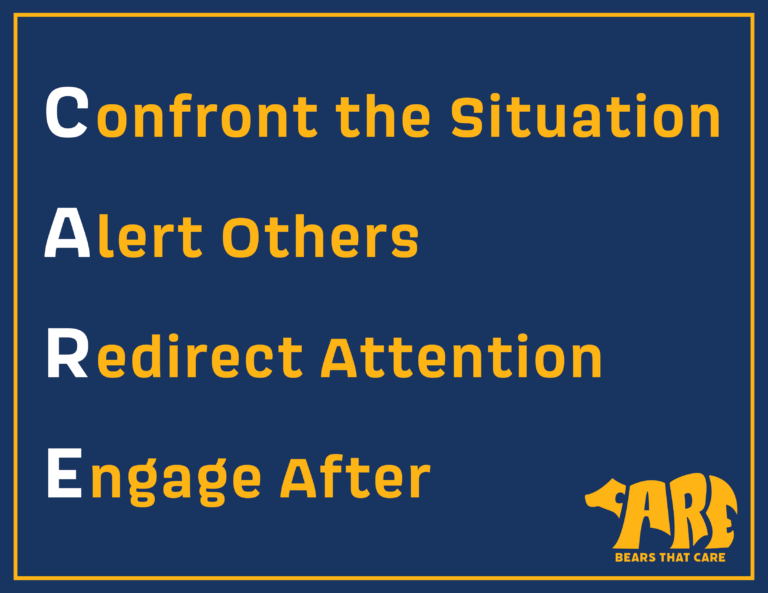
Be an active bystander
You can use the CARE model to find ways of intervening in violence:
Resources for Families
Check out the Building Safe and Healthy Families workbook and supplemental resources for teens, kids, and families from the PATH to Care Center.

Download the Zoom Backround
Download a special Dating and Domestic Violence Prevention Month Zoom background to show your support and spread awareness: